



Creating a relaxing home workspace is essential for maintaining productivity and wellbeing, especially when working remotely. A thoughtfully designed environment can help reduce stress, increase focus, and make your workday more enjoyable. Here are some practical tips to help you create a calming and efficient workspace at home.
Choose the Right Location
Selecting the proper spot for your workspace is the first step. Ideally, pick a quiet area away from distractions such as the television or high-traffic rooms. If possible, choose a space with natural light, as this improves mood and alertness.
Consider these factors when choosing your workspace:
– Noise levels: Opt for a space with minimal background noise.
– Privacy: Choose a room or corner where you can work undisturbed.
– Ventilation: Fresh air keeps you alert and comfortable.
– Natural light: Position your desk near a window if possible to benefit from daylight.
Invest in Comfortable Furniture
Your desk and chair have a significant impact on both your comfort and productivity. An ergonomic chair that supports your back and allows you to sit with proper posture can help prevent strain or discomfort during long working hours.
Tips for a comfortable furniture setup:
– Use an adjustable chair with lumbar support.
– Position your monitor at eye level to avoid neck strain.
– Ensure your feet can rest flat on the floor or on a footrest.
– Choose a desk with enough surface area to organise your work essentials.
Create a Calming Colour Scheme
Colours influence mood and mindset. Opt for soft, neutral tones or calming colour palettes in your workspace to evoke relaxation and focus. Shades like light blues, greens, or muted earth tones often work well for a peaceful atmosphere.
How to use colour effectively:
– Paint walls in calming colours or use neutral wallpaper.
– Add cushions or rugs in soothing shades.
– Avoid bright colours that might be distracting or overstimulating.
Organise Your Space Efficiently
Clutter can increase stress and reduce your ability to focus. Keeping your workspace tidy and organised helps you find things quickly and keeps your mind clear.
Organising tips:
– Use drawers, trays, or desk organisers for stationery.
– Keep only essential items on your desk.
– Regularly declutter and clean your workspace.
– Label storage boxes to easily locate items.
Incorporate Elements of Nature
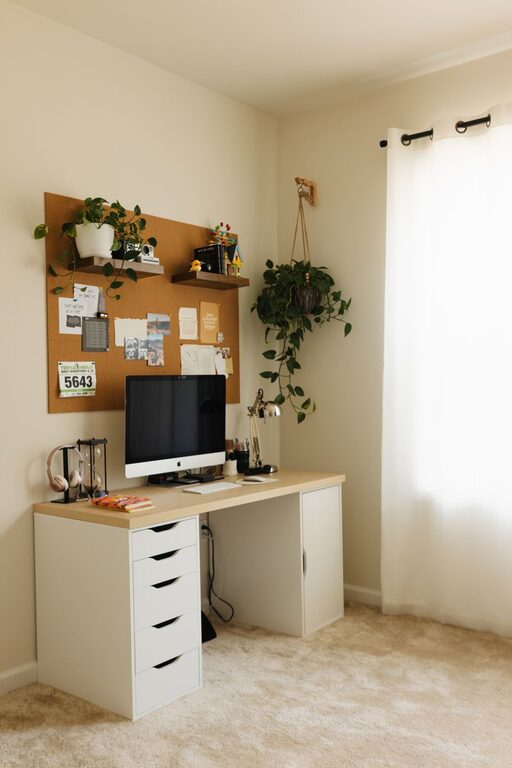
Bringing a bit of nature into your workspace can enhance relaxation and creativity. Plants not only improve air quality but also add a calming, refreshing touch to your environment.
Ways to incorporate nature:
– Place a small indoor plant or succulent on your desk.
– Use natural materials like wood or stone decor.
– Open windows when possible for fresh air and natural sounds.
Minimise Digital Distractions
Technology is essential for work but can also be a source of distractions. Creating boundaries with your devices helps maintain focus.
Tips to reduce digital distractions:
– Turn off non-essential notifications.
– Use apps that block distracting websites during work hours.
– Keep your phone out of arm’s reach or on silent mode.
– Arrange your screen for easy access to work-related programmes only.
Personalise Your Workspace
Adding a few personal touches makes your workspace inviting and comfortable, which can boost motivation.
Ideas for personalising:
– Frame a favourite photo or artwork.
– Have a mug or object that makes you smile nearby.
– Use scented candles or essential oil diffusers with calming scents like lavender, if allowed.
Establish a Routine and Boundaries
A relaxing workspace is most effective when paired with a consistent routine and defined work-life boundaries.
How to set routines and boundaries:
– Start your day with a ritual, such as a cup of tea or a short stretch.
– Set specific working hours and take regular breaks.
– Use a separate workspace exclusively for work to mentally switch off when finished.
– Communicate your schedule to household members to avoid interruptions.
Lighting and Sound Considerations
Proper lighting is crucial to reduce eye strain and support alertness, while sound can influence concentration.
Lighting tips:
– Use a combination of natural and soft artificial light.
– Avoid harsh overhead lights; desk lamps with adjustable brightness are ideal.
– Consider using daylight bulbs that mimic natural light.
Sound options:
– Use noise-cancelling headphones if background noise is unavoidable.
– Play calming instrumental music or white noise if it helps focus.
– Keep your workspace away from noisy appliances or areas.
Keep Hydrated and Take Breaks
A peaceful workspace supports wellbeing, but so does maintaining healthy habits.
– Keep a water bottle nearby to stay hydrated.
– Take short breaks every hour to stretch and rest your eyes.
– Incorporate movement or relaxation exercises during breaks to refresh your mind.
—
By combining these elements, you can create a relaxing home workspace tailored to your needs. Such an environment not only boosts productivity but also supports your mental and physical health, making working from home a more pleasant and successful experience.