


Creating a home workspace that is both relaxing and productive can significantly improve your work-from-home experience. Whether you’re freelancing, studying, or managing tasks, having a dedicated area that balances comfort and functionality helps reduce stress and boost efficiency. In this post, we’ll explore practical tips to help you design a home workspace that supports your well-being and motivates you to get things done.
Why a Relaxing and Productive Workspace Matters
When working from home, distractions and discomfort can reduce focus and lower the quality of your output. A workspace that encourages relaxation helps to ease tension and mental fatigue, while a well-organised, efficient environment supports concentration and productivity. Combining these qualities makes your workday more enjoyable and sustainable.
Choosing the Right Location
Find a Dedicated Space
If possible, select a spot in your home solely for work. This helps create a mental boundary between work and rest, making it easier to switch off after hours. A spare room, quiet corner, or even a section of your living room can work well.
Consider Natural Light
Position your desk near a window to benefit from daylight, which can improve mood and energy levels. Avoid glare on your screen by placing your computer perpendicular to the window. If natural light is limited, invest in good-quality lighting to reduce eye strain.
Ergonomic Comfort
Invest in a Good Chair
A comfortable, supportive chair helps prevent back pain and improves posture, which is essential for long hours of work. Look for adjustable chairs with lumbar support.
Desk Height and Setup
Your desk should allow your arms to rest comfortably with elbows at a 90-degree angle while typing. Keep your monitor at eye level to avoid neck strain. Using a laptop stand or external keyboard can help achieve this.
Organise for Efficiency
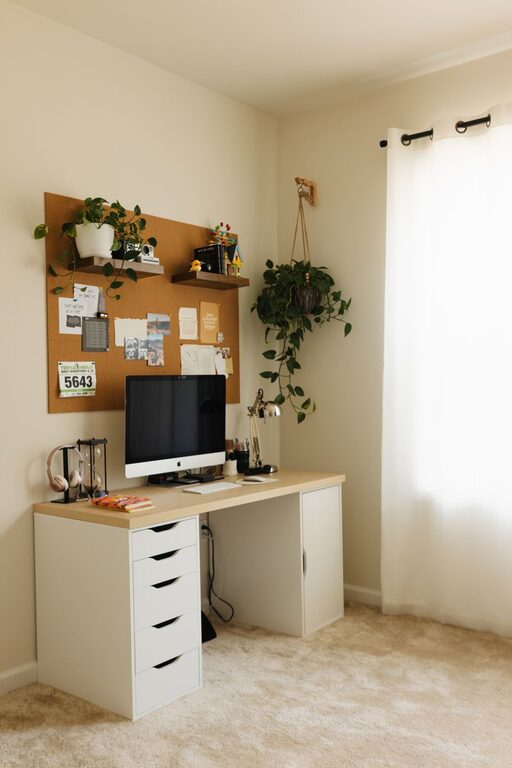
Keep essential items like your keyboard, mouse, and notepads within easy reach. Clutter-free spaces contribute to a clearer mind and less frustration.
Declutter and Personalise
Tidy Up Regularly
A cluttered desk can lead to distraction and stress. Regularly clear away unnecessary papers and gadgets to keep your workspace tidy.
Add Personal Touches
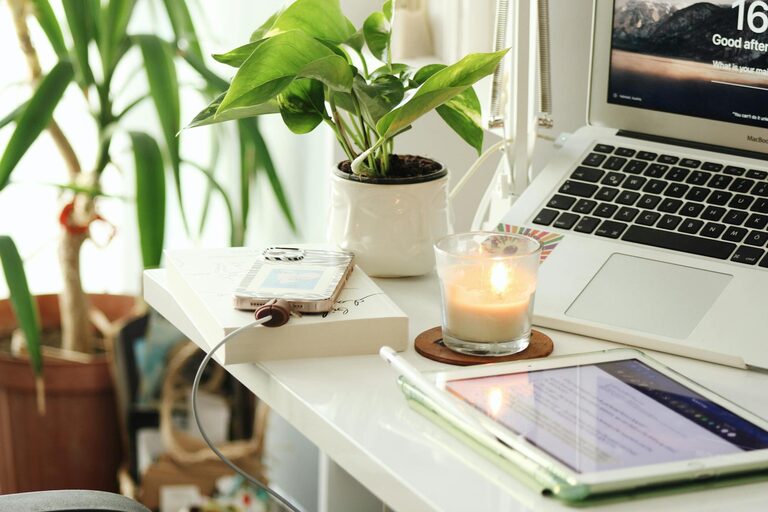
Incorporate items that make the space inviting, such as plants, photos, or artwork. These can boost happiness and creativity without causing distraction.
Use Colours and Décor Wisely
Choose Calming Colours
Soft, neutral tones like light blues, greens, or greys create a relaxing atmosphere. Avoid overly bright or intense colours that can be overstimulating.
Incorporate Textures and Softness
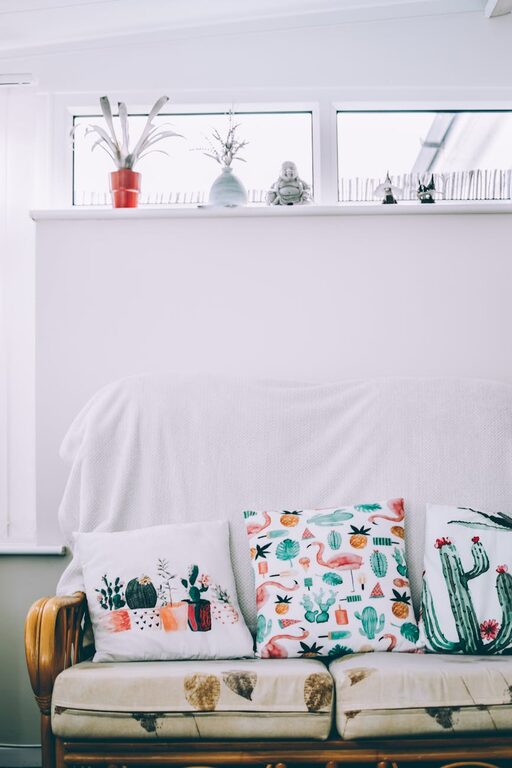
A comfortable rug or cushions can add warmth and reduce the sterile feel of some work areas.
Manage Noise Levels
Reduce Distracting Sounds
If background noise disturbs your focus, consider using noise-cancelling headphones or a white noise machine.
Play Soothing Sounds
Some people find gentle music or ambient nature sounds help maintain concentration and calm.
Set Boundaries and Organise Time
Define Work Hours
Clearly set when you start and finish work within your dedicated space. Maintaining a routine helps separate professional time from relaxation.
Use Timers and Breaks
Use techniques like the Pomodoro method (working in focused intervals with short breaks) to stay productive and avoid burnout.
Technology Tips
Keep Cables Organised
Use cable ties or clips to prevent tangles and keep your desk neat.
Ensure Reliable Connectivity
A strong internet connection reduces frustration and supports smooth video calls or downloads.
Prioritise Wellbeing
Move Regularly
Incorporate short stretches or walking breaks to relieve physical tension.
Stay Hydrated and Nourished
Keep a water bottle nearby and opt for healthy snacks to maintain energy levels.
Consider Air Quality
Good ventilation or an air purifier can improve comfort and alertness.
Final Thoughts
By thoughtfully designing your home workspace with comfort, organisation, and personal preferences in mind, you create an environment where you can focus calmly and effectively. Start with small changes, and gradually tailor your space to fit your needs. The right setting makes work feel less like a chore and more like a positive part of your day.